Ongoing research

Adaptive morphing
We develop innovative morphing structures that can adapt to changing aerodynamic conditions to improve vehicle efficiency and reduce energy consumption. By integrating computational fluid dynamics, optimization algorithms, and wind tunnel experiments, we investigate how shape adaptation modifies the flow physics around vehicles. Our research has demonstrated aerodynamic drag reductions of up to 10% through low-cost, noninvasive morphing designs.
Related publications: Zhang &Blaylock (2026) JAE (240), 7140; Kazemipour & Zhang (2025) JFS (139) 104422.
Plant aerodynamics
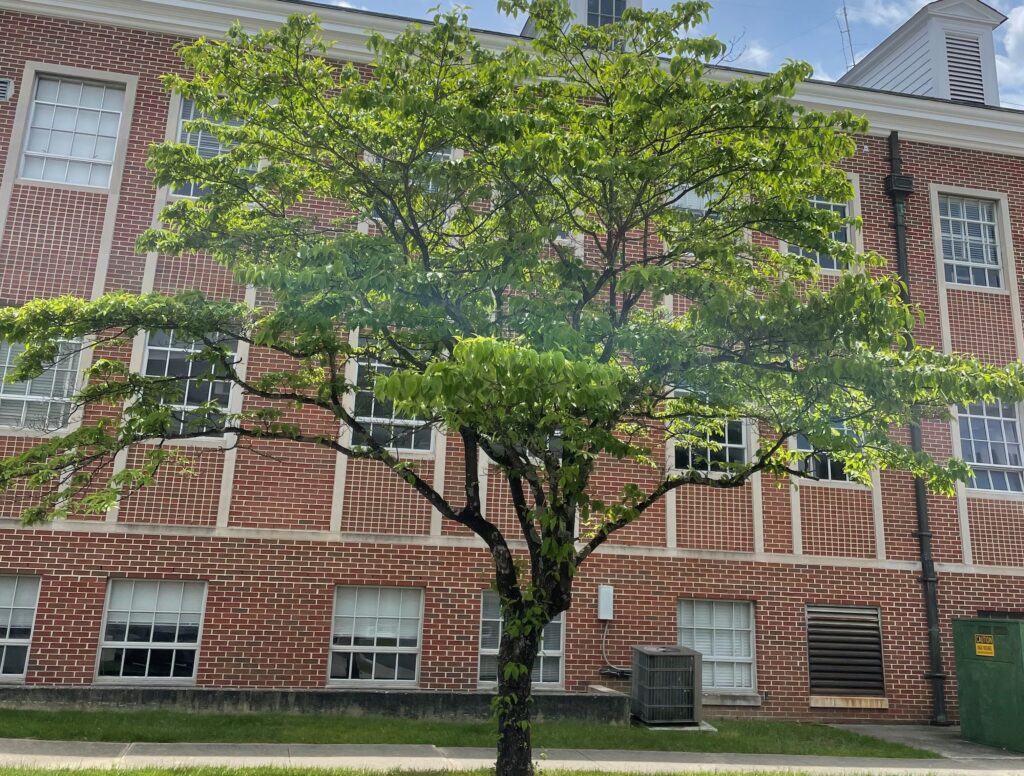
We investigate how trees and other flexible plant structures interact with wind, with the goal of understanding their aerodynamic response and mitigating wind-induced damage. Our research combines nonlinear structural mechanics with aerodynamic modeling to capture the large deformation, shape reconfiguration, and vibration damping of trees under strong winds. Our model could inform physics-based strategies to enhance the resilience of trees and forests against windstorms.
Related publications: Zhang (2024) AMM (131) 381.
Multifunctional materials
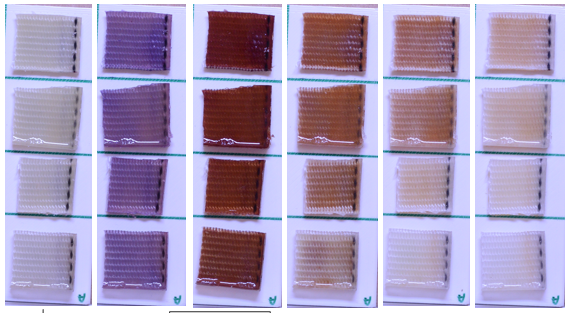
We develop multifunctional materials that respond to environmental stimuli, such as ultraviolet (UV) irradiation and mechanical strain, through measurable color changes. By combining novel material fabrication techniques, experimental characterization, physics-based mathematical modeling, and machine learning algorithms, we seek to understand and predict these responses. Our research enables the development of smart sensing materials and portable devices for noninvasive structural health monitoring.
Related publications: Blaylock et al. (2026) IEEE TIM; Zhang et al. (2022) J. Appl. Phys. (132), 064504; Zhang et al. (2021) Smart Mater. Struct. (30), 085015.
Completed projects

Hydrodynamics of fish swimming
We combined direct experimental visualization and theoretical modeling to investigate the fluid-structure interactions associated with fish swimming. The flow physics around the swimming fish was assessed via particle image velocimetry (PIV), which informed the development of reduced analytical models based on finite dipoles and vortex sheets to elucidate underlying mechanisms of rheotaxis and fish schooling.
Related publications: Zhang et al. (2023) JTB (556), 111313; Porfiri et al. (2022) eLife (11), e75225; Mwafflo, Zhang et al. (2017) PeerJ (5), e4041.

Impulsive loading of naval structures
We established an experimental framework based on digital image correlation and particle image velocimetry, to simultaneously capture the flow field and the structural response associated with fluid-structure interactions. The technique has been employed to study impulsive loading of naval structures resting on a water-air interface. The combined, full-field quantification of these fluid-structure interaction phenomena are critical to the design of naval and aerospace structures.
Related publications: Zhang et al. (2024) JSSM (26), 244; Zhang et al. (2020) JFS (95), 102980; Zhang & Porfiri (2019) COST (224), 111010; Zhang et al. (2019) ETFS (100), 207.

Development of novel sensors
We have pursued fundamental research in
the fabrication of novel flow tracer particles that can afford simultaneous flow velocity and pressure measurement of a fluid flow. Pressure sensitivity is realized through embedding a pressure-sensitive dye in the particles. This new fluid visualization technique may help advance our understanding of complex fluid-structure interaction phenomena that are still not fully explained.
Related publications: Zhang et al. (2019) In SPIE 1096913.

Modeling of smart active materials
We established physically-based models that could inform 3D printing of ionic polymer metal composites (IPMCs), a class of active materials that can function as soft actuators in medical and industrial applications. Our analytical framework are based on a thermodynamically consistent continuum model that describes the coupled electrochemo-mechanical phenomena taking place within the IPMC. The model has been employed to investigate the effect of curvature on the deformation, and the reaction forces exerted by the clamps. This analytical framework has offered new insights into responses of curved IPMCs and feasible approaches to enhance IPMC actuation.
Related publications: Zhang & Porfiri (2022) Smart Mater. Struct. (31), 035013; Porfiri, Sharghi, & Zhang (2018) J. Appl. Phys. (123), 014901.

Nonlinear interaction between optical fields and fluids
Focused, high-power laser beams passing through a fluid-fluid interface can produce a radiation pressure on the interface, thereby deforming its shape. Our research focused on how a liquid microdroplet could function as a high a quality (Q) factor whispering gallery mode (WGM) resonator to preserve laser energy. Liquid WGM resonators could advance various optical functionalities, including lasing, sensing, and the development of tunable photonic devices. Through a series of publications, we established a combined theoretical and numerical framework that could quantify the nonlinear interplay between the optical forces and the flow physics. Our results demonstrated the feasibility of developing nonlinear optic devices that operate effectively at the single photon energy level.
Related publications: Zhang et al. (2016) PRE (93),063119; Zhang et al. (2015) PRE (92), 063033.

Interaction between air bubbles and solid particles
Understanding the hydrodynamic interactions between air bubbles and particles could enhance the efficiency of multiphase separation and reaction processes. We explored the fundamental mechanisms of such complex phenomena by experimentally investigating the interplay between an air bubble and a solid particle inside a Hele-Shaw cell. A theoretical model based on the Darcy’s law was established to shed light on the subtle forces at play during the particle-bubble interactions. Our work could provide insight into the collision, attachment, and detachment between particles and bubbles in a suspension, thereby paving the way for innovative techniques in mineral recovery and processing.
Related publications: Zhang et al. (2016) PRE (94), 023112.