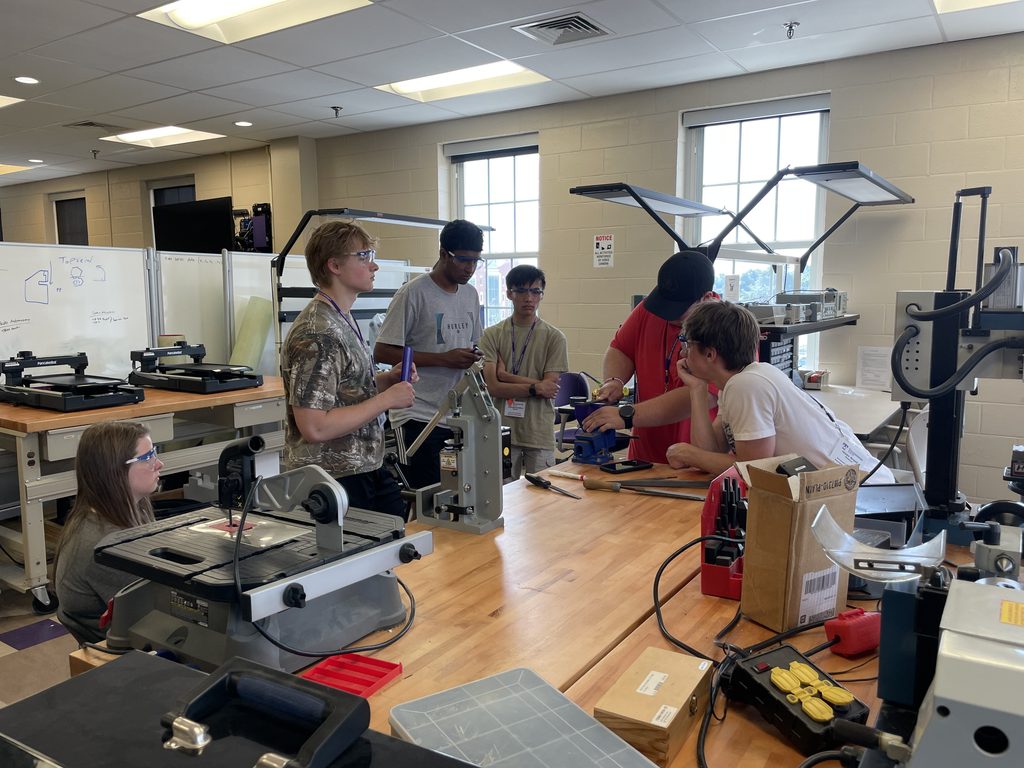
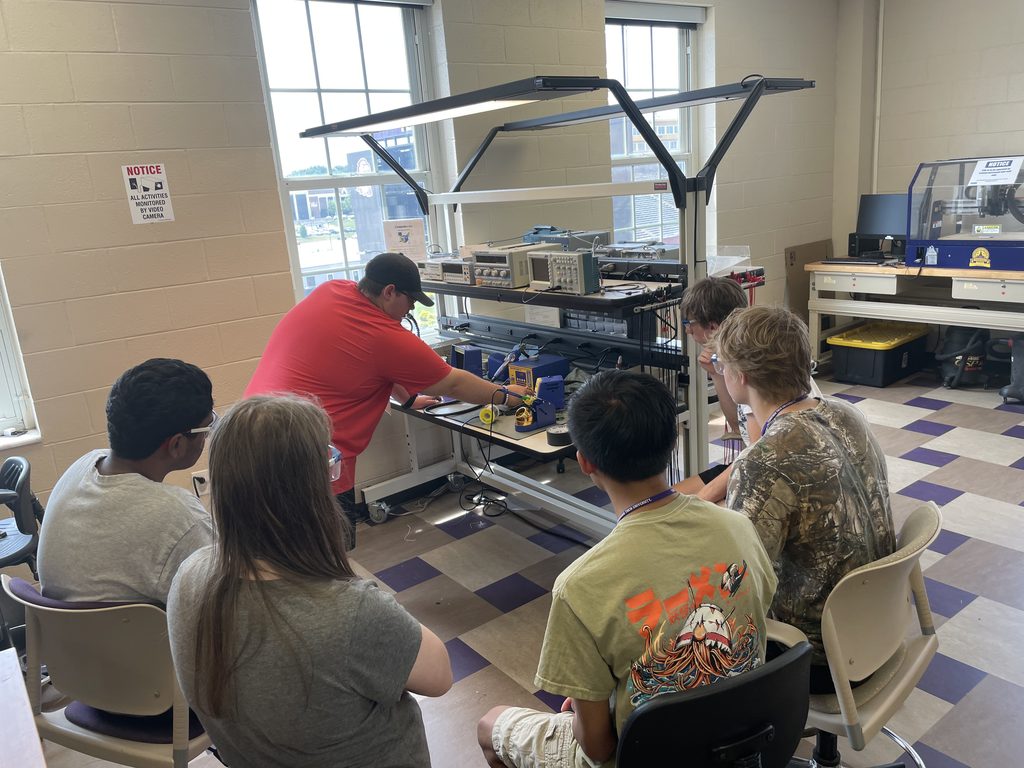
Our PhD student, Branson, demonstrating the use of machining tools and soldering stations
Small wind turbines can significantly enhance the energy efficiency of residential buildings. However, the optimal design of these small turbines for residential applications remains uncertain due to highly turbulent wind environments and complex wind-induced vibrations. In this project, students will employ computer-aided design (CAD) and simulation tools to optimize small turbine designs toward improved power generation. Computational fluid dynamics (CFD) simulations will be performed on horizontal axis wind turbines to elucidate the aerodynamic principles underlying power generation. CFD will be integrated with optimization algorithms to refine the designs of rotors and blades. The performance of the optimal designs will be validated through experimental testing. Students will leverage 3D printing to produce prototypes of their turbine blade designs, which will be evaluated for power generation capability in Tennessee Tech University’s low-speed wind tunnel facility. Through this project, students will develop skills in CAD design, 3D printing, and CFD, while gaining hands-on experience in wind tunnel experiments.
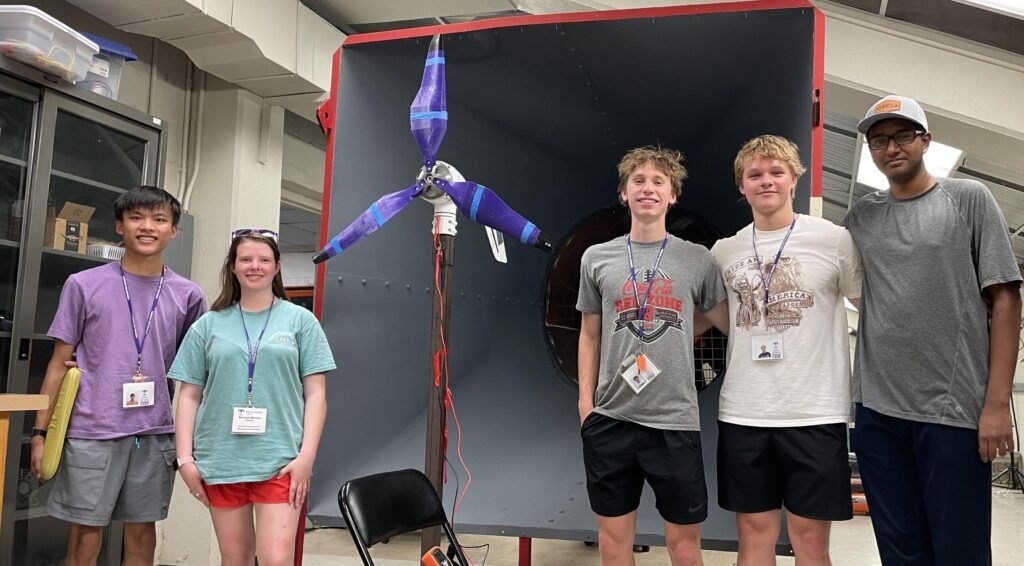
The team and their wind turbine tested at the wind tunnel facility
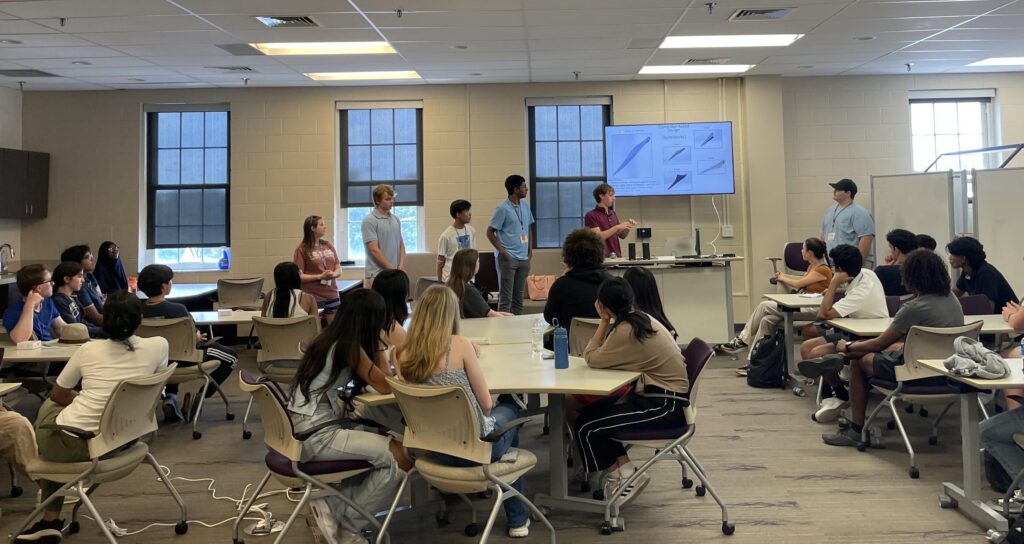
The team showcasing their work at the final presentation